
As Concord prepares to celebrate the 250th anniversary of the Minutemen’s victory over the Redcoats at the North Bridge, let’s remember that many of those who made a difference on April 19, 1775 were neither Minutemen nor Redcoats.
When the Minutemen mustered in anticipation of battle, some came prepared with cartridges, consisting of a musket ball and a pre-measured charge of powder wrapped in paper cylinder—a vastly more efficient way to reload a musket than measuring powder from a powder horn. According to historian Robert Gross in The Minutemen and Their World, teenaged Meliscent Barrett enlisted the town’s young women to assemble cartridges for the men who would use them to defend the town.
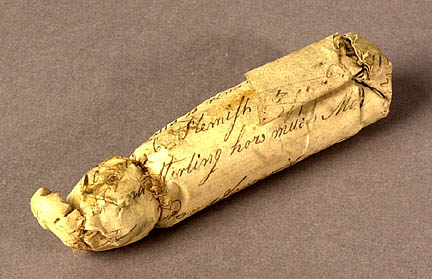
Image: 18th Century musket cartridge. Source: militaryheritage.com
At around 7:30 a.m. on April 19th, Lt. Col. Francis Smith and Maj. John Pitcairn led a force of over seven hundred British soldiers into Concord and made their field headquarters in Wright’s Tavern. A bit of local folklore says that Elizabeth Wright (wife of tavernkeeper Amos Wright) feared that the Redcoats would steal the church’s valuable communion silver, so she hid it in a barrel of soap in the Tavern.
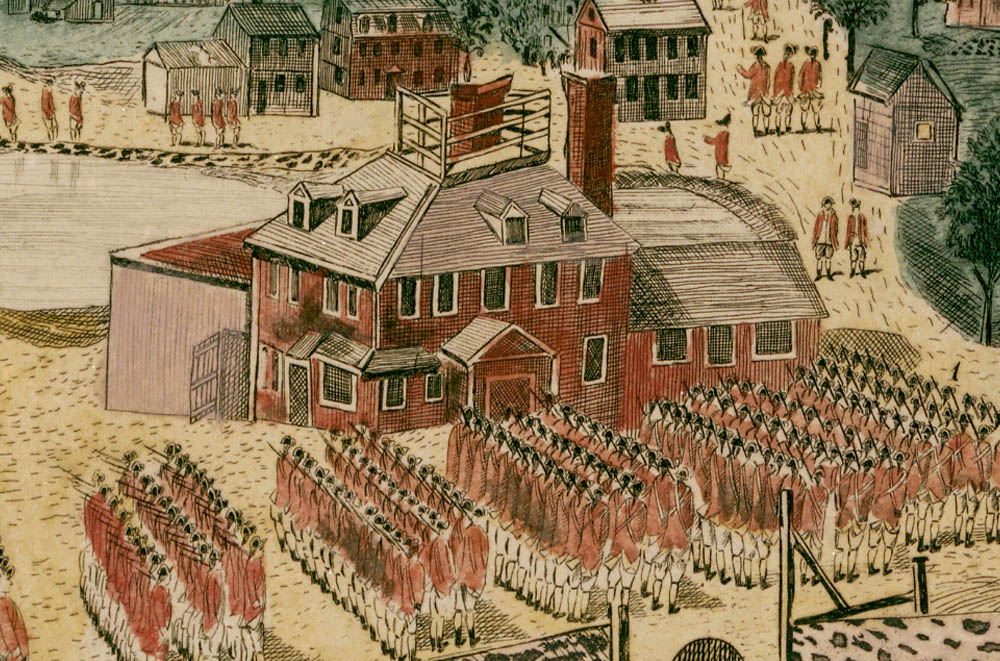
Image: British troops in front of Wright’s Tavern, April 19, 1775. Source: Detail of engraving by Amos Doolittle.
Robert Gross reports that Lydia Taylor (the wife of Daniel Taylor, the owner of the building) was in the barroom when British officers were paying for their meal. As she was making change, several musket balls fell from her pocket. An officer said, “Madam, what do you intend to do with those balls?” She replied, “Sir, I would use them in a Firelock if I had one.”
British troops searched the town for military supplies hidden in homes and barns. They tore down the town’s Liberty Pole and set it on fire. Martha Moulton was a widow employed as a housekeeper by Dr. Timothy Minot who lived in the town center. When she saw the fire spreading to the nearby town house, she ran into street to demand that the soldiers put out the fire. They waved her away, saying “O mother, we won’t do you any harm!” She got their attention by shouting, “The top of the house is filled with powder, and if you do not put the fire out, you will all be killed.” They put out the fire, and the town was saved.
Ephraim Jones was the town jailer and kept an inn next door to the jail. English Maj. John Pitcairn forced his way into Jones’s premises, because his spies had told him there were three cannons hidden in the jailyard. Pitcairn’s men found the cannons, but they missed another treasure, thanks to Hannah Barnes, who worked at Jones’s tavern. Henry Gardner, treasurer of the Provincial Congress, had a chest of money and secret papers in his room at the tavern; Barnes kept the Redcoats out by insisting that room was her own.
Dorothy Wood, wife of patriot Amos Wood, also kept British soldiers from finding military stores in her house by appealing to their sense of propriety. An officer pointed to closed door and asked if there were “some females” in there. Mrs. Wood declared, “I forbid any one entering this room!”
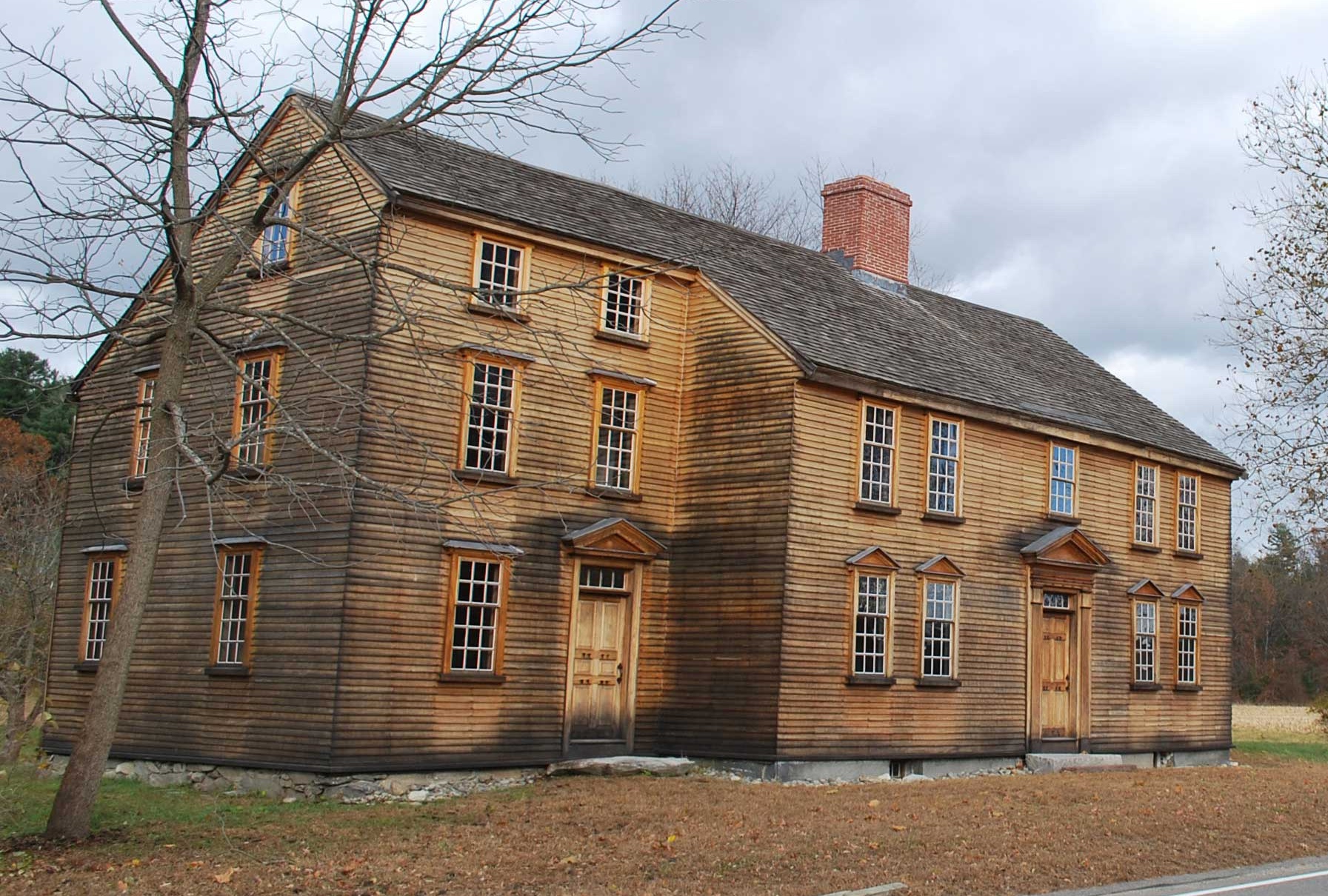
Image: Home of Col. James Barrett and Rebecca Hubbard Barrett. Source: National Park Service.
James Barrett, Colonel of the Minutemen, hid weapons and ammunition at his farm. His wife Rebecca Hubbard Barrett and her sons buried bronze cannons and hid other supplies. British troops came to her door, saying “Our orders are to search your house,” but they found nothing. They demanded food and drink, which Mrs. Barrett provided. She refused their offer of money, saying “We are commanded to feed our enemies.” They threw a handful of coins at her, and she sneered, “This is the price of blood.”
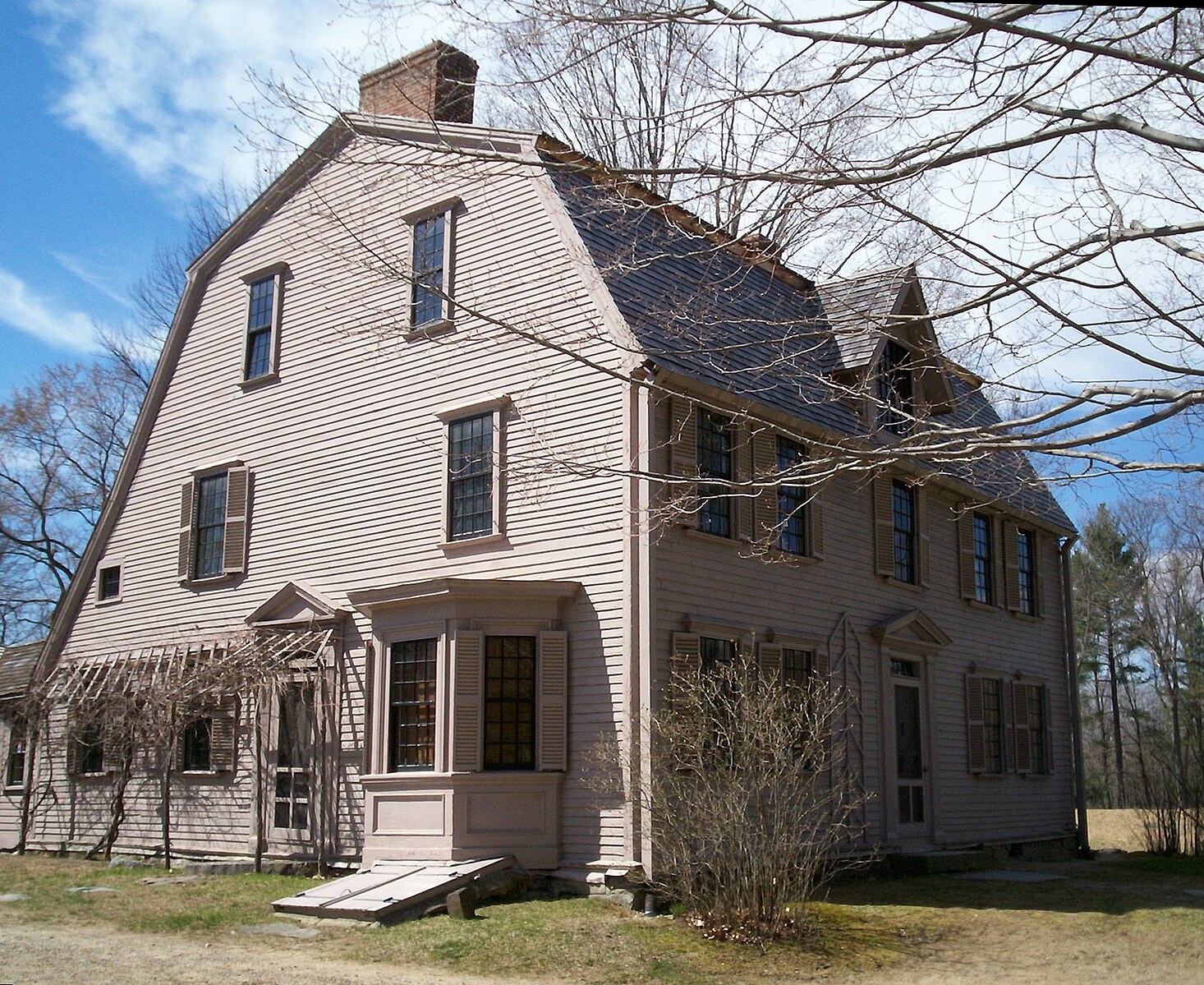
Image: The Old Manse, home of Phebe Bliss Emerson and Rev. William Emerson; birthplace of Mary Moody Emerson. Source: Wikimedia Commons, User:Midnightdreary.
Phebe Bliss Emerson was the wife of William Emerson, minister of the town’s only church, and the daughter of the previous minister. We know from family accounts that Phebe and her children watched the battle at the North Bridge from the windows of their house, just 150 yards from the bridge. Rev. Emerson extolled the patriot cause from the pulpit of his church, perhaps making life awkward for Phebe, whose brother Daniel Bliss was a loyalist who would later flee to Canada and serve as a Colonel in the British Army.
One of Phebe’s children was Mary Moody Emerson, born at Old Manse in 1774. On April 19, 1775 Phebe watched the battle with eight-month-old Mary in her arms. Mary would grow up to be a wise, self-reliant woman, an avid reader and insightful writer. She possessed a deeply personal, independent spiritual sense, a belief that you could experience God without churches or scriptures, with nature as her main source of inspiration. In her words, “I danced to the music of my own imajanation,” and her ideas formed the core of what her nephew Ralph Waldo Emerson would later call Transcendentalism.
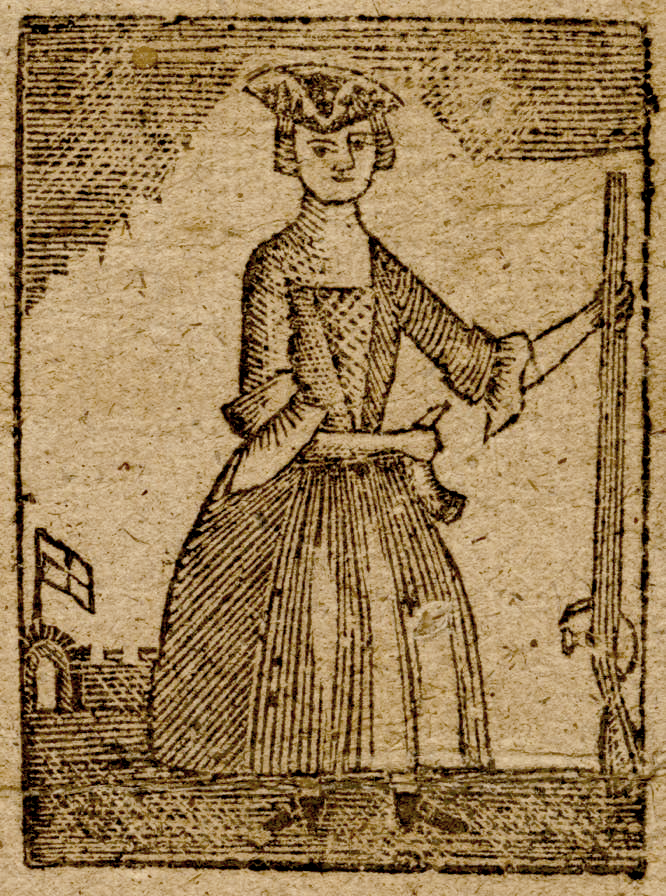
Title image: Woodcut detail from Molly Gutridge, A new touch on the times (Danvers, MA: Ezekiel Russell, 1779). Source: New York Historical Society.
 History Lives