
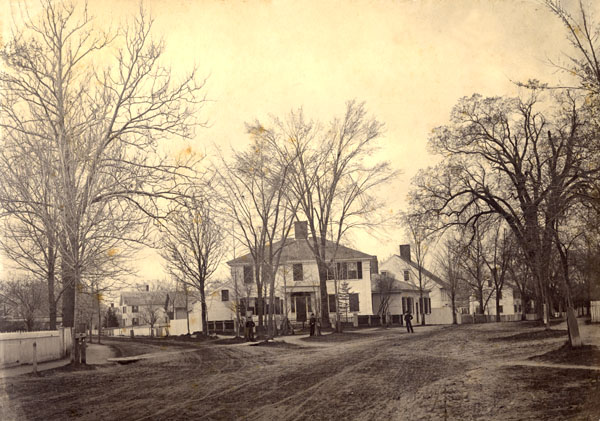
“On the morning of the 17th, Mrs. Brooks’s Irish girl Joan fell down the cellar stairs, and was found by her mistress lying at the bottom, apparently lifeless. Mrs. Brooks ran to the street-door for aid to get her up, and asked a Miss Farmer, who was passing, to call the blacksmith near by. The latter lady turned instantly, and, making haste across the road on this errand, fell flat in a puddle of melted snow, and came back to Mrs. Brooks’s, bruised and dripping and asking for opodeldoc. Mrs. Brooks again ran to the door and called to George Bigelow to complete the unfinished errand. He ran nimbly about it and fell flat in another puddle near the former, but, his joints being limber, got along without opodeldoc and raised the blacksmith. He also notified James Burke, who was passing, and he, rushing in to render aid, fell off one side of the cellar stairs in the dark. They no sooner got the girl up-stairs than she came to and went raving, then had a fit.
Haste makes waste. It never rains but it pours. I have this from those who have heard Mrs. Brooks’s story, seen the girl, the stairs, and the puddles.”
—From the journal of Henry David Thoreau, March 19, 1856
[Opodeldoc is a lotion to relieve pain. George Bigelow lived across Sudbury Road from the Brookses. Like them, he and his wife Ann sheltered freedom seekers on the Underground Railroad.]
Image: Brooks House at the intersection of Main Street and Sudbury Road, ca. 1865. Source: William Munroe Special Collections, Concord Free Public Library
 History Lives